
Settle in USDC.Keep your bitcoin.
Post cirBTC once. Tidrel draws the exact USDC a trade needs and repays it the moment USDC comes back.
Built on

The problem
Prefund the USDC
Hold idle USDC at every venue, ready for a trade that may not come.
Sell the bitcoin
Give up the position you meant to keep, to pay for a few minutes of settlement.
The USDC leg of a trade ties up capital for longer than the trade needs it.
Ask a broker for credit
Relationship terms and a credit process, for a need that lasts seconds.
Prefund the USDC
Hold idle USDC at every venue, ready for a trade that may not come.
Sell the bitcoin
Give up the position you meant to keep, to pay for a few minutes of settlement.
Ask a broker for credit
Relationship terms and a credit process, for a need that lasts seconds.
Tidrel lends the exact USDC for exactly as long as the trade takes to settle.
How it works
Three steps, each one a transaction on Arc mainnet.
01
Draw exact USDC against cirBTC.
Your desk shows what you can draw right now. Tidrel draws only the shortfall a trade needs, and your bitcoin stays posted as collateral.
See a draw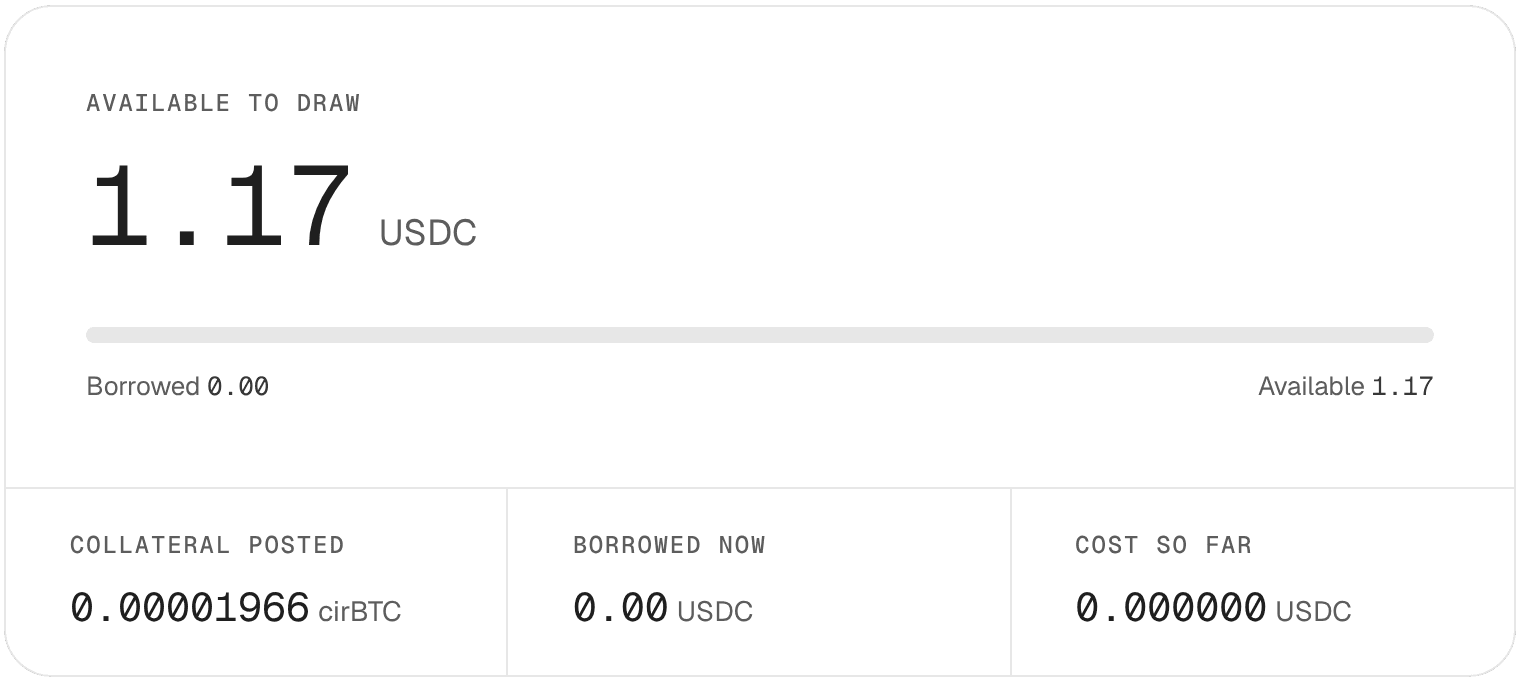
02
Pay every counterparty in one transaction.
Each payment carries your trade reference on chain, and every settlement gets a receipt you can share.
See a payout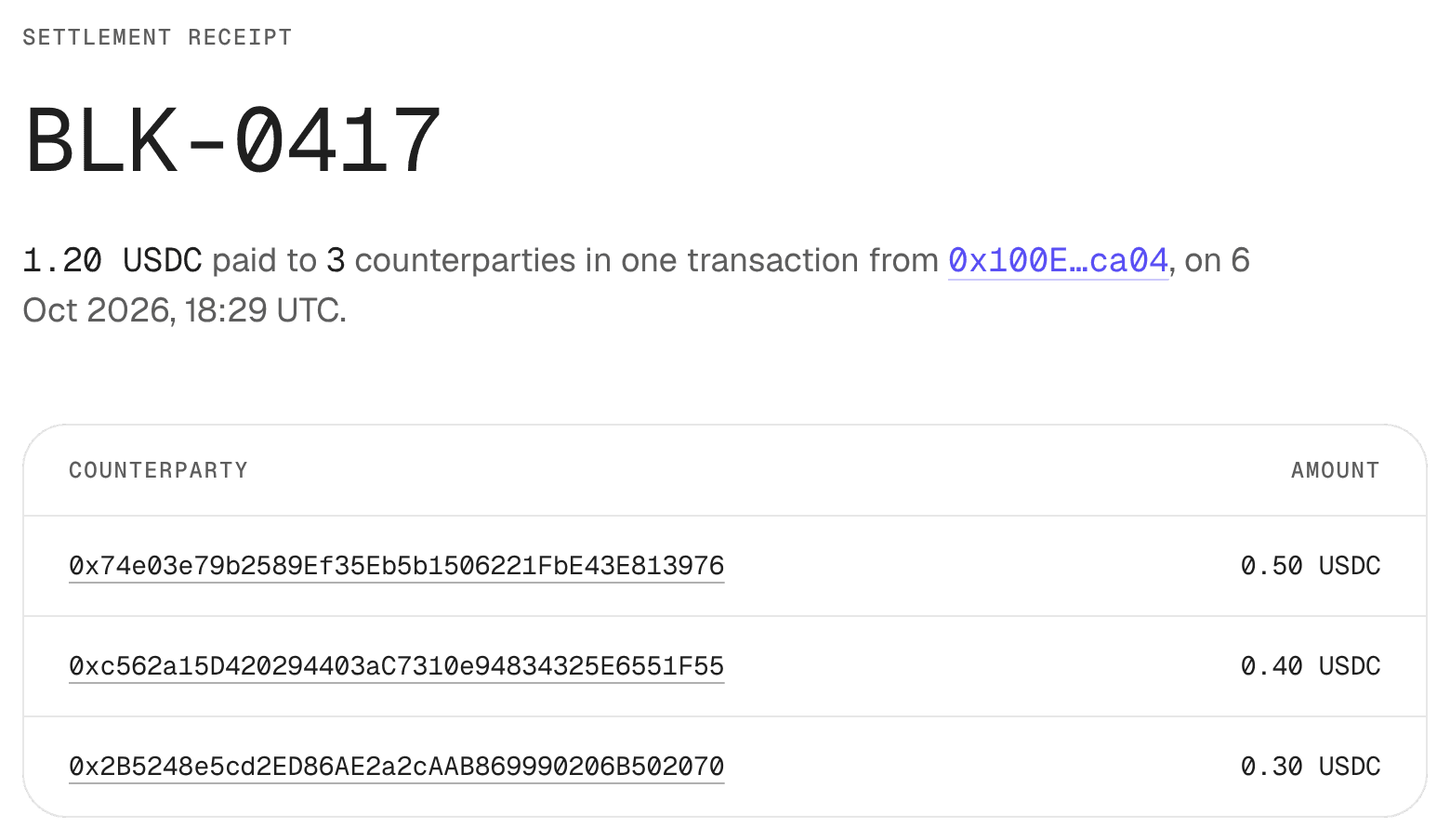
03
Repay the moment USDC comes back.
The debt stays open for seconds, not days. One signature closes it, and the tide line shows every draw and repay.
See a repay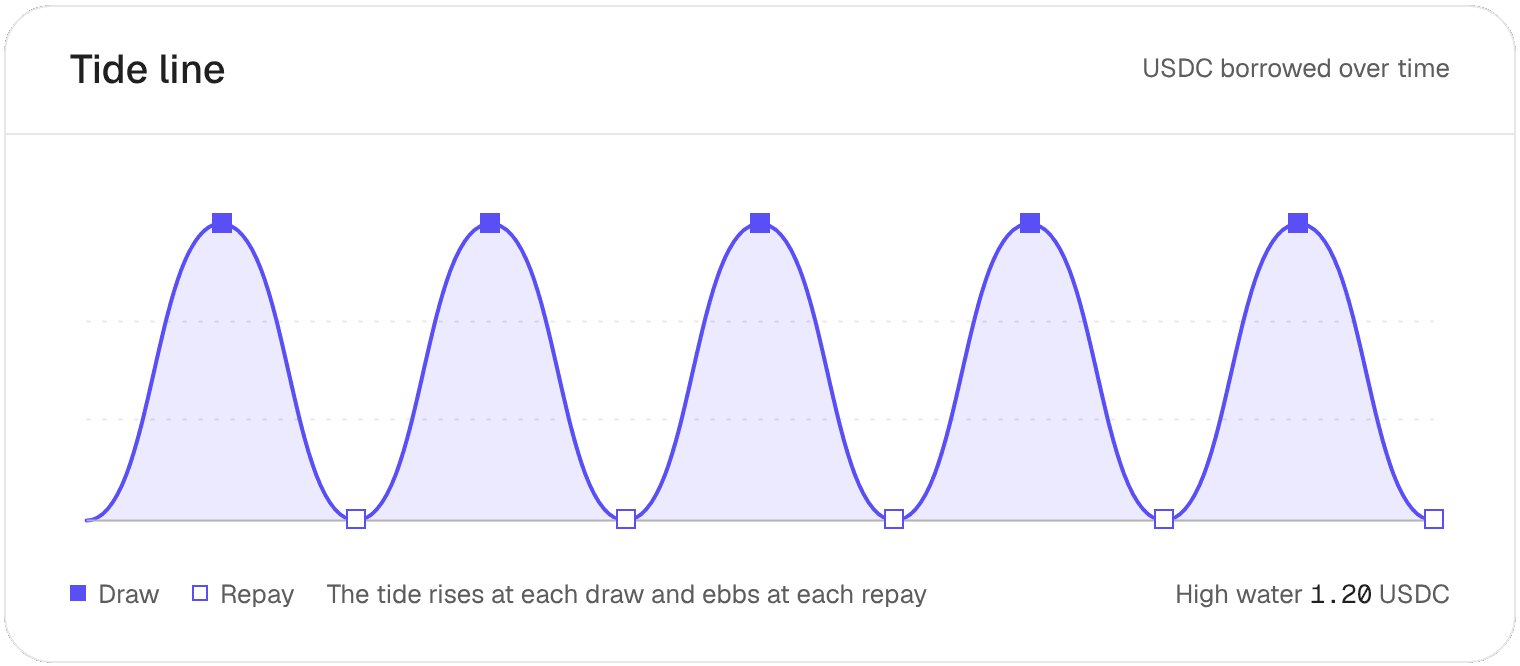
Mainnet proof
Numbers from a real loan on Arc mainnet.
Read from the chain, not typed in. Every figure links to its transaction on the proof page.
Headline cycle
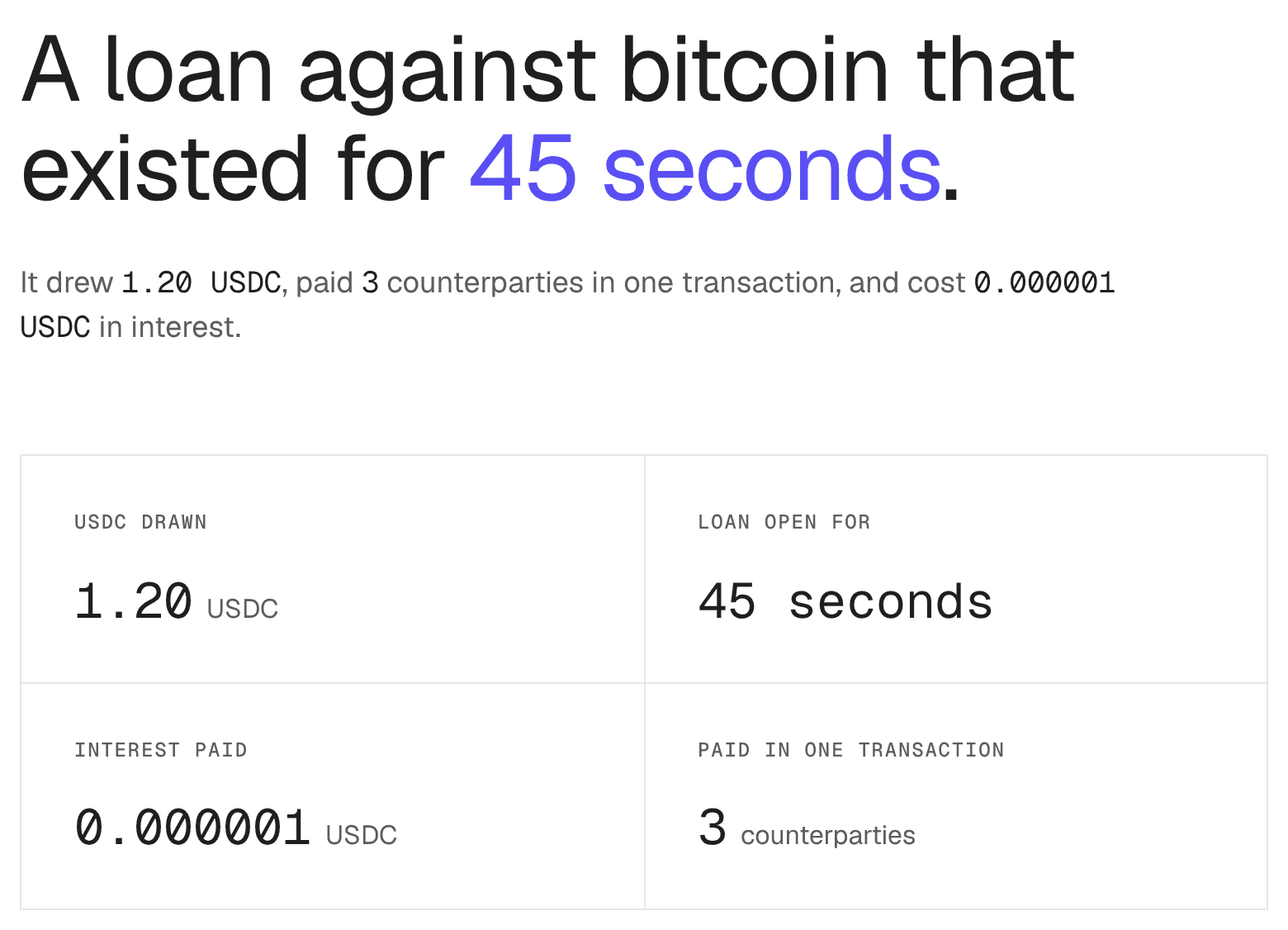
A loan against bitcoin that existed for 45 seconds.
See the mainnet proof- Interest for the whole loan
- 0.000001 USDC
- 4 settlements drawn, paid and repaid
- 44 seconds to 199 seconds each
Why now
What the market says about the capital a settlement ties up.
“Institutional spot OTC volumes expanded +109% YoY, while top-20 CEXs grew just +9% YoY by year-end 2025.”
“Requiring full payment before each one would force it to keep enormous sums idle, pre-positioned across venues, just to be ready to trade.”
Mintarex: Crypto OTC credit and financing“For many BTC holders, selling is a blunt instrument that can reduce potential upside exposure, disrupt strategic treasury operations, create accounting complexity, or trigger taxable events.”
Circle: How USDC and cirBTC unlock capital efficiency“Stablecoin settlement via blockchain networks can complete in minutes”
Fasset: OTC crypto settlement for treasury teams
Safety
Built to refuse the risky draw.
A health floor of 1.20
A draw that would take your loan health below the floor is refused before you sign anything.
Never past what the market can lend
Tidrel reads the market's liquidity first and refuses a draw above it.
All payments, or none
Every counterparty is paid by one contract call. If one payment would fail, nothing is sent.
Questions
Before you connect a wallet.
What does a loan cost?
Interest for the seconds the loan is open, at the variable rate of the cirBTC and USDC market on Morpho Blue. Tidrel adds no fee. The latest loan in the mainnet run cost 0.000001 USDC in total.
What happens if the bitcoin price drops?
Your loan health drops with it. Tidrel refuses any new draw below 1.20 and your desk warns you as health falls. Below 1.00 the market can liquidate part of your cirBTC, so repay or add collateral before then. Loans here stay open for seconds, which keeps that window small.
Who holds my bitcoin?
Your cirBTC sits as collateral in the Morpho Blue market, in your wallet's own position. Tidrel never holds funds or keys, and its contract has no owner. See the contracts.
What do I need to start?
A regular wallet on Arc mainnet that holds cirBTC. Your first draw posts the cirBTC it needs. To look around first, open the desk and pick “View the demo desk”.

Pay the trade now. Keep your bitcoin.
Connect a wallet, post cirBTC once, and settle in USDC the moment a trade needs it.